THE LOG HOME EXPERIENCE

An educational series by eLoghomes

The Log Home Experience is an educational series by eLoghomes, meant just for you. From the time you first dream of log home living until you are relaxing and unwinding in your finished home, our goal is to help make your journey easy and rewarding.

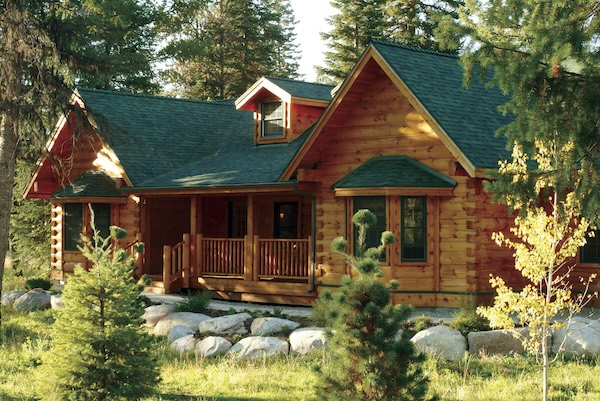
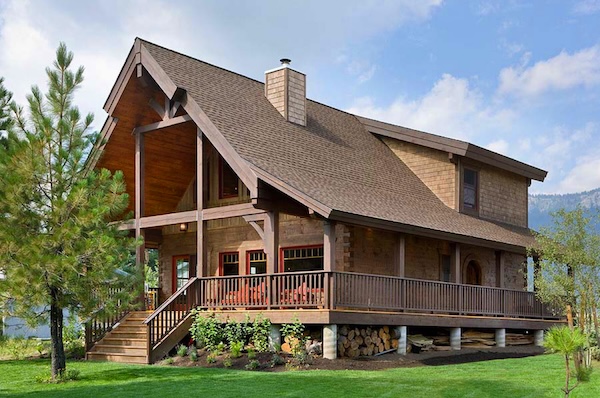
When you picture your new log home, you probably think about the floor plan, setting, stain color, or the view from the great room. But another important consideration is the species of wood used for the logs.

Not all wood behaves the same way. Instead of simply asking which species is strongest or lasts longest, consider a better question: Which wood provides the best combination of characteristics for a solid-log wall?

Eastern White Pine has been used successfully for generations because it offers a strong balance of manageable weight, stability, insulation, appearance, availability, and cost. Eastern White Pine is renowned for its low resin content, reducing or even eliminating sap/resin “bleeding”, as well as its exceptional ability to accept stains and protective finishes.

In this article, we’ll compare the characteristics of six commonly used wood species.

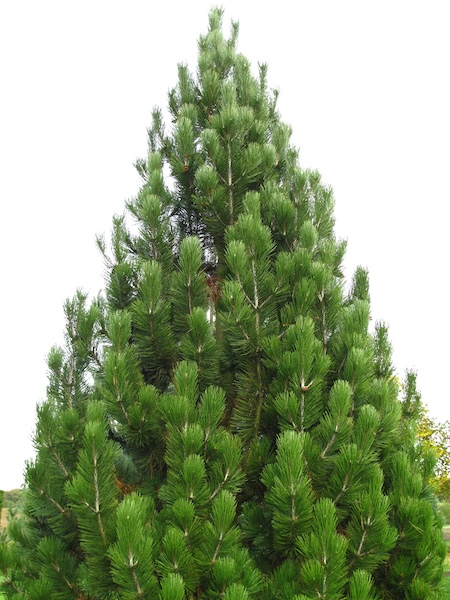
1. Eastern White Pine: The Top All-Around Performer

 
Eastern White Pine’s biggest advantage is balance. It is visually attractive, relatively lightweight, stable, warps and checks less than competing species, and provides excellent energy efficiency because of its lower density.

These characteristics are especially valuable in precision-milled log construction, where logs must be accurately manufactured, transported, assembled, and able to respond predictably to changing moisture conditions.

BEST KNOWN FOR: A strong overall balance of stability, insulation, workability, availability, appearance, and cost.

2. Southern Yellow Pine: Stronger Isn’t Always Better

 
Southern Yellow Pine is denser and stronger than Eastern White Pine, making it excellent structural lumber. But greater strength does not necessarily make it a better wall log.

Its higher density means greater weight and lower energy efficiency. It can also experience more dimensional movement as moisture levels change, making shrinkage, checking, twisting, and settling important considerations.

BEST KNOWN FOR: High strength and density.

3. Cedar: Naturally Resistant, but at a Price

 
Cedar is lightweight, dimensionally stable, and naturally resistant to decay—valuable qualities for exterior applications.

The primary tradeoff is cost. High-quality cedar suitable for log construction can carry a significant premium over more readily available pine. It is also relatively soft, has more knots, and is generally less structurally strong than Southern Yellow Pine or Douglas Fir.

BEST KNOWN FOR: Natural decay resistance and dimensional stability.

4. Douglas Fir: A Structural Powerhouse

 
Douglas Fir is exceptionally strong and stiff, making it an excellent choice for beams, rafters, trusses, girders, and timber-frame components.

For wall logs, however, that extra strength may provide little practical advantage. Douglas Fir is heavier and denser than Eastern White Pine, is less energy efficient, and can be more difficult to machine and handle.

Its strengths make it an outstanding structural timber—but not automatically the ideal wall log.

BEST KNOWN FOR: Exceptional structural strength and stiffness.

5. Oak: Hard, Heavy, and Exceptionally Strong

 
Oak is hard, strong, durable, and visually distinctive, making it popular for flooring, cabinetry, furniture, and other wear-resistant applications.

As a wall log, however, its weight and density become trade-offs. Oak experiences significant dimensional movement and provides less thermal resistance per inch than lighter species.

BEST KNOWN FOR: Hardness, strength, durability, and distinctive appearance.

So, Which Wood Makes the Best Log?

No species wins in every category. Douglas Fir and Southern Yellow Pine excel in structural strength. Cedar stands out for natural decay resistance. Oak offers exceptional hardness and durability.

But a solid-log wall requires a balance of these key characteristics:

  • Structural stability
  • Energy efficiency
  • Weight
  • Strength
  • Appearance
  • Cost and availability
  • Long-term serviceability

That balance is where Eastern White Pine clearly stands out. Rather than maximizing one characteristic at the expense of others, it combines the qualities most useful in solid-log construction.

Understanding these trade-offs can help you evaluate log home manufacturers and material packages based on what really matters—not simply which wood species sounds strongest on paper.

Connect with Michael, your eLoghome advisor.

Start Today

Ask about our NEW Platinum Energy Efficiency Package