
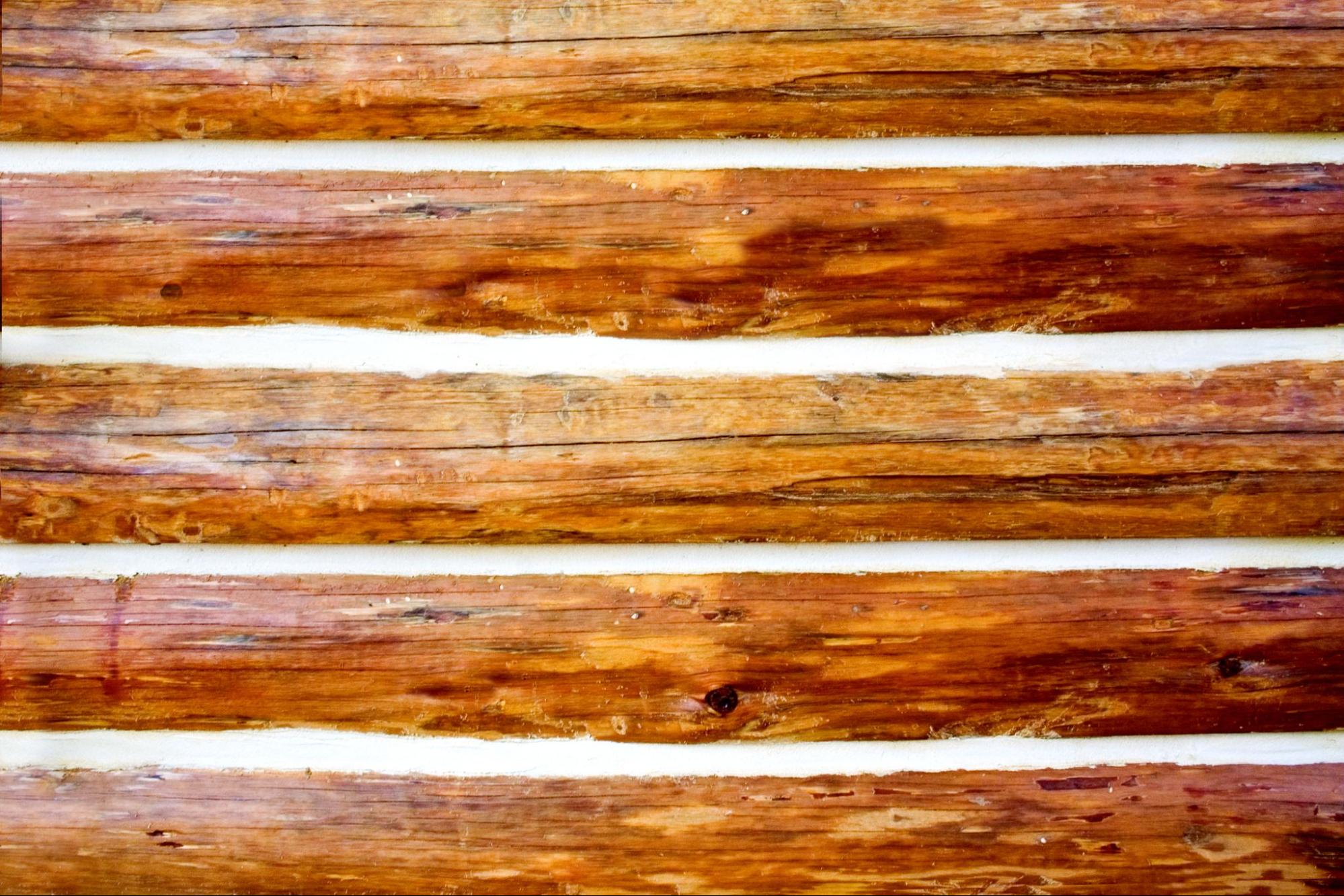
Log homes are architecturally unique, and that’s a huge part of their appeal. In a typical lumber-framed house, the structural framing sits behind drywall, insulation, siding, and trim, but in a log home, the walls you see inside and out support the structure and serve as the finished surface.
Because log walls do double duty, proper sealing supports long-term durability and comfort. This starts with good design and quality logs. With modern precision-milled logs, sealing requirements are minimal and strategically applied.
Two terms often come up in log construction: chinking and caulking, though they are not used the same way in modern homes. Chinking today is primarily a design choice used to create a traditional, old-style appearance.
Below, we explain how log chinking differs from caulking and why most modern log homes rely on concealed sealing methods instead.
What is chinking?
Log chinking is a material placed between logs to fill large, visible gaps, typically for visual effect rather than functional sealing. Modern chinking is typically made of flexible elastomeric acrylic compounds that can withstand swings in temperature, heat, and humidity.
The material fills the horizontal spaces where one log meets the next. Those gaps can form naturally with certain log profiles, especially in handcrafted or round log homes.
Chinking can help:
- Create a traditional log cabin appearance
- Highlight horizontal log lines with contrast
- Replicate historic construction styles
Modern log wall systems are often designed to fit tightly together and may not require wide chinking joints. In this case, builders may use color-matched caulking designed specifically for log home applications in place of thick, textured chinking material.
What is chinking made of?
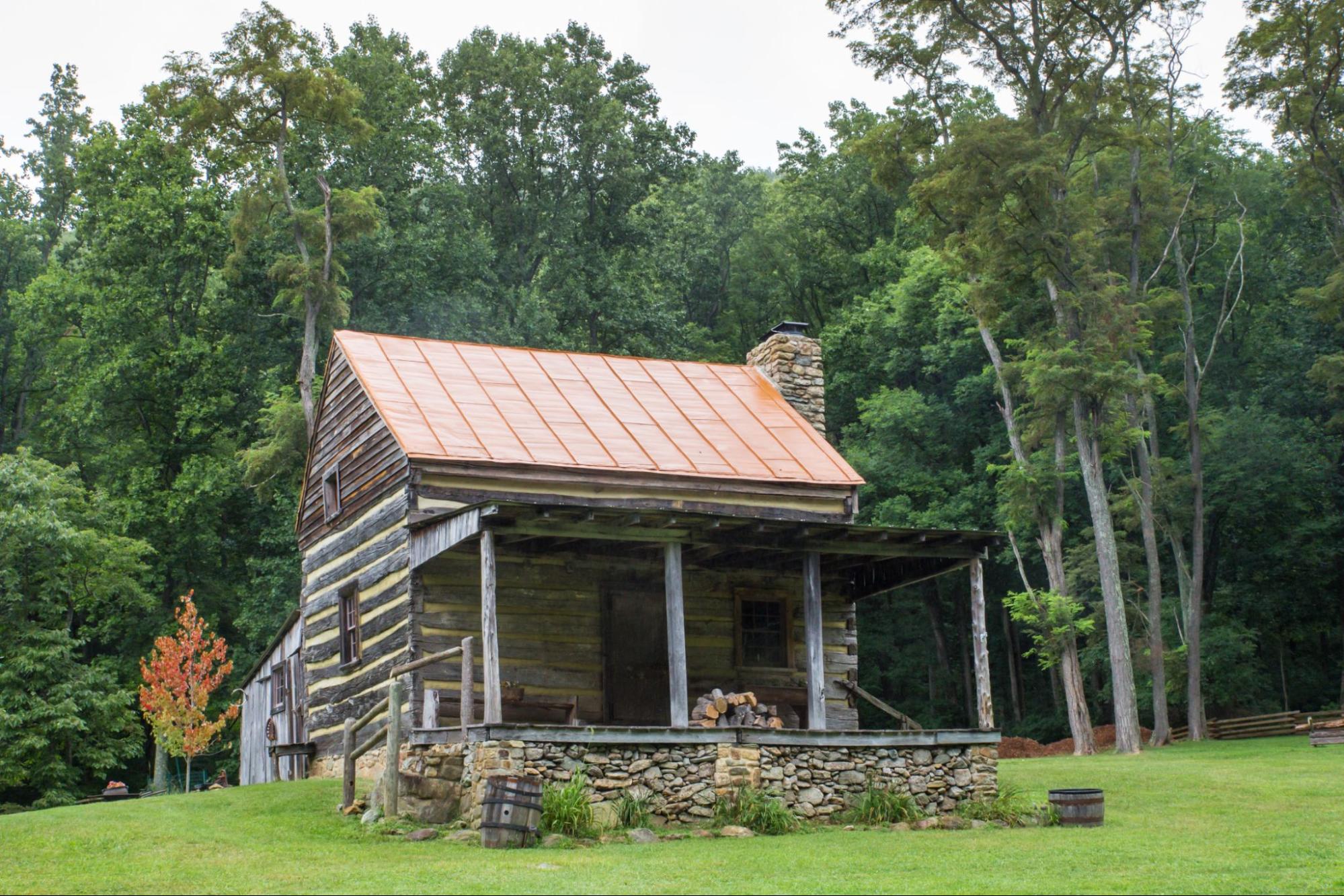
Historically, chinking was made from mud, clay, sand, and straw, commonly used in 1800s Appalachian log homes. Modern chinking materials are much more advanced.
Builders may also use backing materials to control joint depth and provide proper support behind the chinking. Together, these components support the application and appearance of chinking within the wall system.
How has chinking evolved over the years?
Chinking has changed as log construction methods have improved. Early cabins relied on necessity. Builders worked with irregular logs and filled large voids with natural materials. Over time, these materials required frequent maintenance and replacement.
As milling technology advanced, builders produced more uniform log shapes. Precision-milled logs and interlocking profiles eliminated the need for chinking in most modern systems. Improved joinery allowed logs to interlock more tightly.
Today, chinking is rarely required in modern log construction, though some homeowners appreciate its traditional look.
What is caulking?
Log home caulking is the primary method used to seal modern log walls in precision-built systems. It is applied in smaller joints and concealed areas to control airflow and moisture without altering the appearance of the logs.
Unlike chinking, caulking is designed to blend into the wood surface rather than stand out. In modern log construction, caulking is typically used:
- Under the upper log lip, where it is protected and not visible
- Along tight-fitting seams between logs
- Inside cracks wider than one-quarter inch, known as checks, where caulking is applied to seal the crack and match the log color
- Around windows, doors, and penetrations
Color-matched caulking allows the wall system to maintain a natural wood appearance while still providing targeted sealing.
In many cases, neither visible chinking nor extensive caulking is required due to the tight fit of modern log systems.
When is chinking used vs. caulking?
Chinking is used only when a homeowner wants a traditional, high-contrast log cabin look. It is most often seen in:
- Historic-style or restoration projects
- Chink-style homes designed with visible spacing
- Designs that intentionally highlight each log course
Log house chinking is not intended for waterproofing or primary sealing in modern log homes. Caulking is used for modern sealing, applied in concealed areas to control airflow and moisture while supporting long-term durability and comfort. In many modern log homes, tight-fitting logs reduce the need for visible sealing materials altogether.
Build Your Dream Log Cabin With eLoghomes
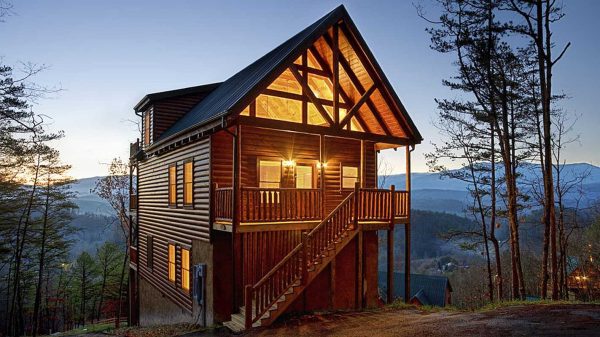
eLoghomes offers a huge selection of fully customizable log cabin home kits. Choose from a variety of log styles, including notch and pass, traditional round logs, and more. Our team will work directly with you and your builder or general contractor throughout the design and construction process.
eLoghomes leads the way in energy-efficient home design. Our precision-milled logs and 6-point WeatherLink™ system help create a weather-tight seal, shielding your home from the elements. Our approach focuses on tight log construction and concealed caulking rather than visible chinking. Learn more about our design advantages, then search our model gallery to find your perfect home!