
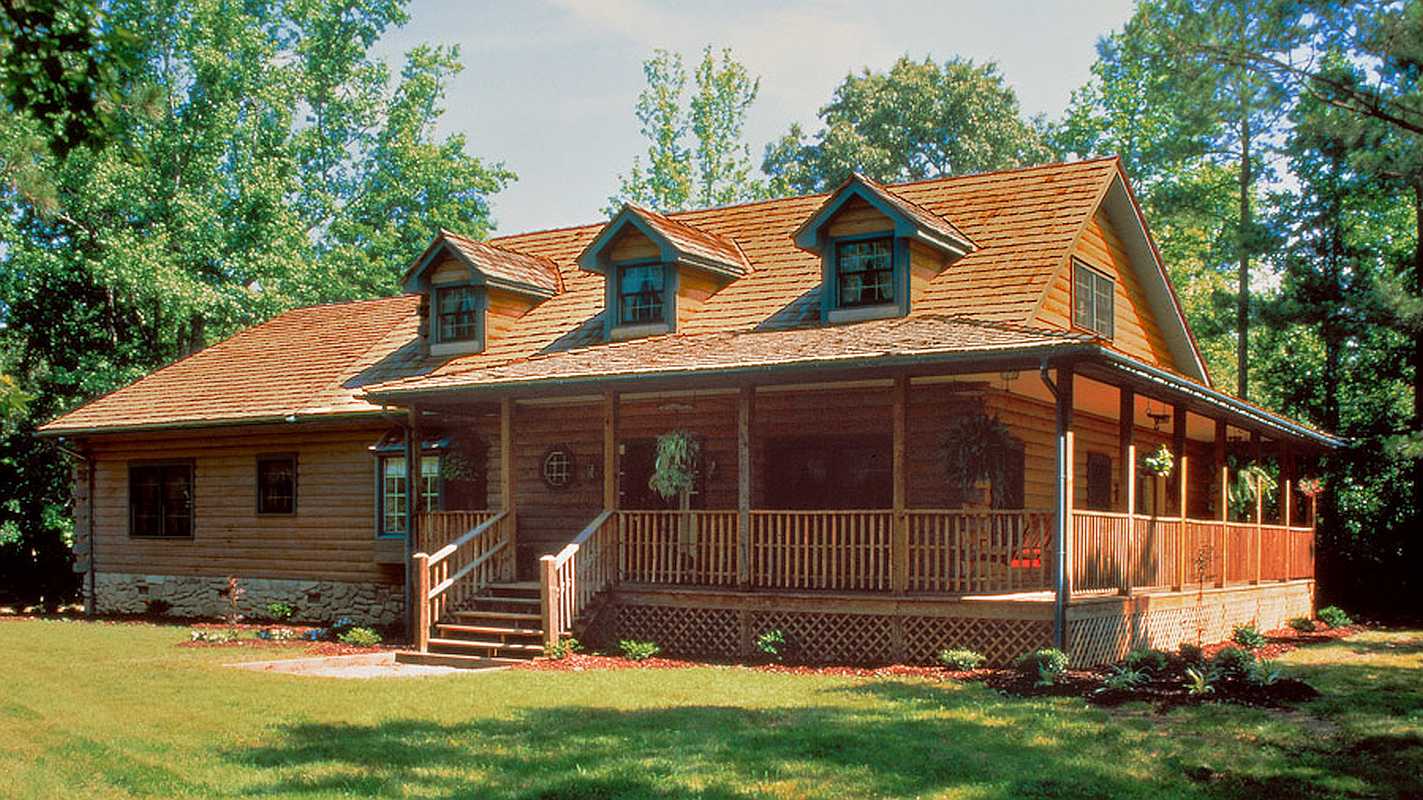
If you’re researching energy-efficient log cabin homes, you may be wondering about log cabin insulation and how it works. Log homes already give you a head start when it comes to energy efficiency and comfort. That’s because wood has thermal mass, and when combined with tightly sealed log construction, it helps maintain steady indoor temperatures while limiting unwanted air movement and energy loss.
The thermal effect of solid log walls has been well documented by the Log Homes Council (a division of the National Association of Home Builders) and other expert organizations. In fact, well-designed log homes can be even more energy efficient than conventional homes. Ahead, we’re going to show you just how insulated log cabins really are—naturally.
Conventional Home Insulation vs. Log Home Insulation
When comparing the energy efficiency of conventional stick‑built homes with log cabin homes, it comes down to two different approaches to achieving comfort and energy efficiency. Both types of homes can perform well, but they rely on different principles.
In a conventional stick-built home, the wall system works as a layered assembly. You have a framed structure, and the insulation fills the cavities between the studs. The performance depends on how well those materials work together to slow heat flow.
A log home simplifies this idea. Instead of adding insulation inside the wall, the wall is the insulation. Solid logs provide both structural support and thermal mass in one unified system.
The key differences include:
- How heat is managed: Conventional walls rely on insulation materials to resist heat transfer, while log walls use the thermal mass of wood to absorb and release heat gradually.
- Wall composition: Stick‑built homes use multiple layers (framing, insulation, sheathing, siding), while log homes use a single material (solid log walls) that handles both strength and temperature moderation.
- Energy performance: Conventional insulation focuses on R‑value, while log homes benefit from both R‑value and the time‑lag effect created by thermal mass.
- Design priorities: In a conventional home, the focus is on insulation type and thickness. In a log home, log size, wood species, and proper sealing are key factors.
- Air infiltration: Stick-built homes rely on multiple materials and installation quality to limit air leakage, while log homes use tightly fitted solid logs and engineered sealing systems to reduce airflow through the wall system.
Both systems can create a comfortable living environment, but they rely on fundamentally different construction methods to achieve that performance.
How R-Values Apply to Log Home Construction
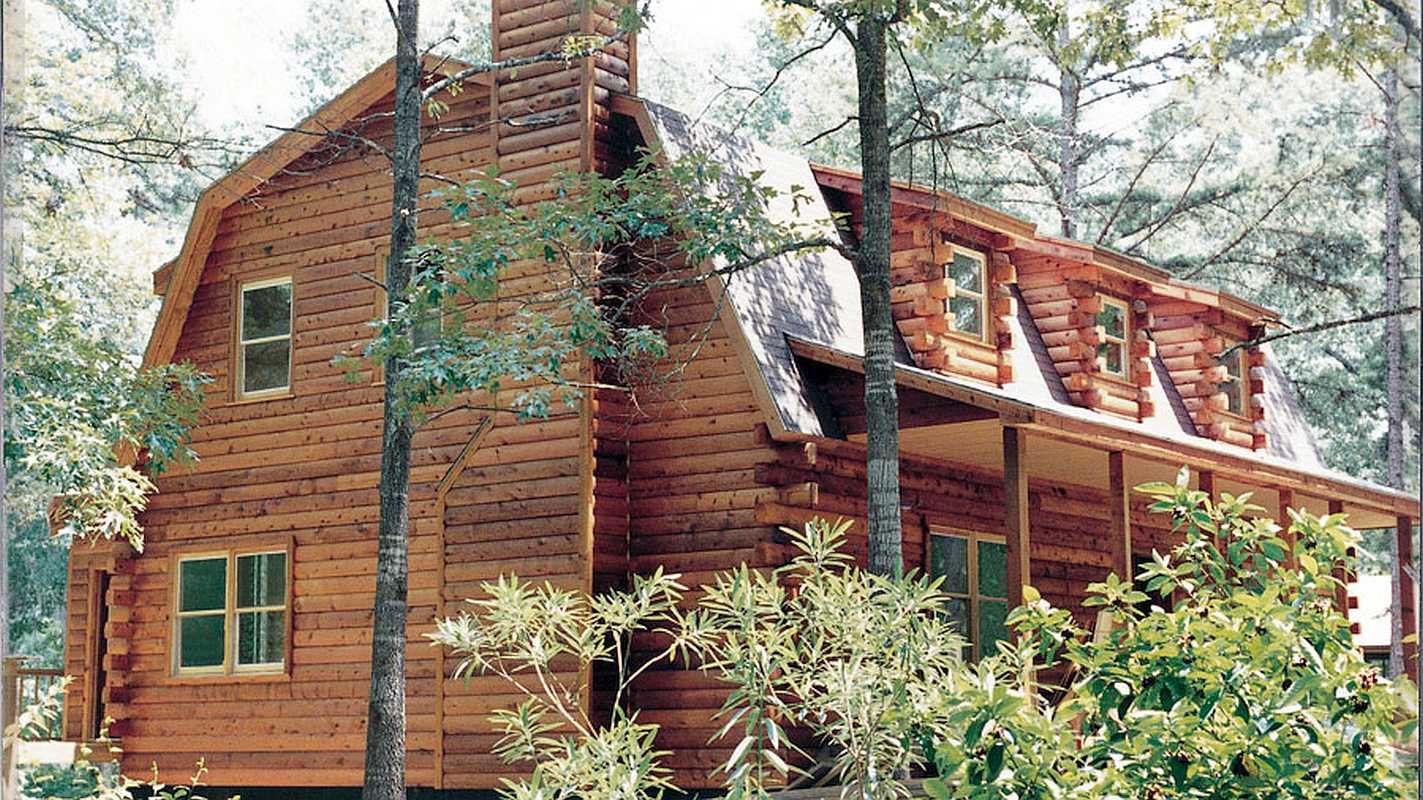
One of the challenges in evaluating log home performance is that most energy codes and testing methods rely heavily on something called R‑values. R‑value measures how well a material resists heat flow, and it works well for conventional insulation products like fiberglass, cellulose, and spray foam. These materials behave predictably, so regulators can compare them using a single number.
Log walls, however, don’t operate the same way. Solid wood provides insulation, but it also stores and releases heat through its thermal mass. That means a log wall’s performance involves both resistance to heat flow and the timing of that heat movement. Because R‑value only captures one part of that behavior, it doesn’t fully reflect how a log wall moderates temperature over a full day.
This doesn’t make one system better than the other—it simply highlights that log walls follow a different thermal model.
In some cases, however, log walls may perform better than conventionally insulated homes. That’s because the thermal performance of conventional stick-built homes can degrade over time from sagging insulation, damaged vapor barriers, or failure of external water screens, while these issues don’t occur in log homes.
How Log Wall Tightness Reduces Air Infiltration
One of the most important advantages of solid log construction is how tightly the wall system comes together. Air infiltration, which refers to outside air leaking into a home through gaps and joints, has a direct impact on energy efficiency, comfort, and indoor air quality.
In a conventional stick-built home, small gaps can form as materials shift, settle, or degrade, allowing drafts and temperature fluctuations to develop. Log home walls are built from large, solid wood components that fit together with precision, creating a much tighter envelope with fewer pathways for uncontrolled airflow. This tighter construction delivers several performance benefits:
- Reduced drafts: Less outside air entering the home means fewer cold spots in winter and less heat intrusion in summer.
- Improved energy efficiency: Heating and cooling systems do not need to compensate for constant air leakage.
- More consistent indoor temperatures: Rooms stay stable throughout the day without sharp fluctuations.
- Better moisture control: Limiting air movement helps reduce the risk of condensation inside wall systems.
Because the wall system relies on large, interlocking components instead of layered materials, there are fewer points where air leakage can develop over time. This allows log homes to maintain their performance more consistently, without the gradual efficiency loss that can occur in multi-material wall systems, while helping keep warmth inside where it belongs.
Build Your Energy-Efficient Log Cabin With eLoghomes
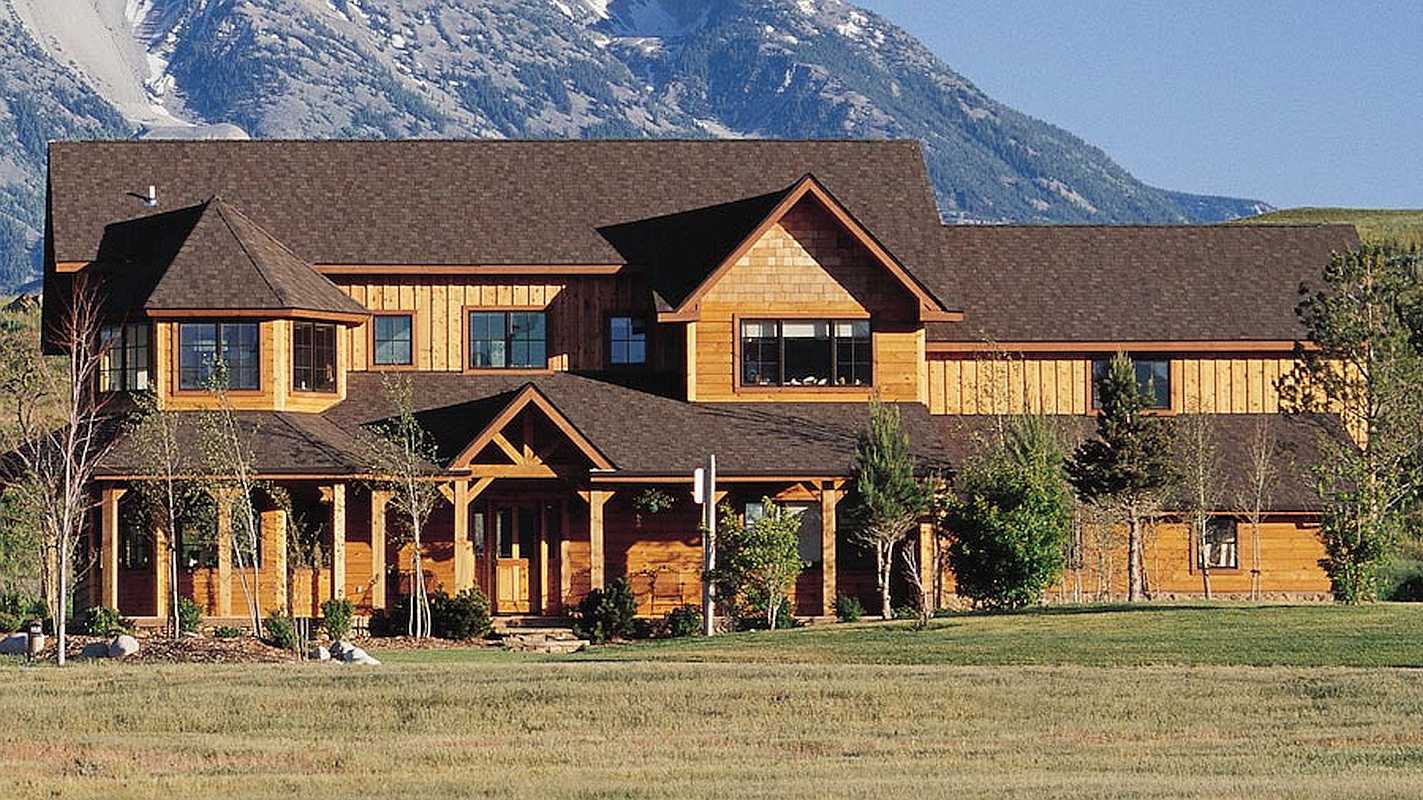
eLoghomes leads the way in energy-efficient log home design. Every eLoghomes model features our 6-Point Weatherlink™ System, which helps reduce air infiltration for superior energy performance and indoor comfort.
eLoghomes models are designed to deliver high levels of energy efficiency and long-term performance. Learn more about our design advantages, browse our model gallery, then search our log home packages to find the best one for your needs.
FAQs
Are log homes energy efficient?
Yes—log homes designed and built to industry standards can match or exceed the efficiency of stick-frame homes, thanks to the thermal mass of log walls, which store warmth in the cold months and keep interiors cool in the summer.
According to the National Association of Home Builders, well-designed and constructed log homes may be expected to perform from 2.5% to over 15% more energy efficient than an identical wood-frame home (accounting for annual purchased heating and cooling energy needs).
Are log cabins insulated?
Yes, log cabins are naturally insulated, thanks to the thermal mass of solid log walls. Log walls retain heat and release it slowly. This process helps maintain a more stable indoor environment, keeping your home comfortable in winter and summer.
How is log cabin insulation different from that of conventional homes?
In a conventional stick-built home, insulation materials like fiberglass, foam, or rock wool fill the spaces between framing, while the structure does little to control temperature. In a log cabin, solid wood walls use thermal mass to absorb and release heat over time, helping regulate indoor conditions more naturally.