

Picture yourself stepping into a light-filled log home where the eye is drawn to a luxury kitchen, cozy seating areas next to a stone fireplace, and floor-to-ceiling windows underneath soaring cathedral ceilings. There is nothing quite as warm and inviting as an open concept log cabin combined with the rustic appeal of natural logs. Designing the perfect open concept log home includes not only the Great Room, but also the layout of everything around it.
Here are six expert tips, drawn from eLoghomes’ designers, to help you design the ultimate open concept log home.
DESIGN TIP #1
Start With Vertical Spaces
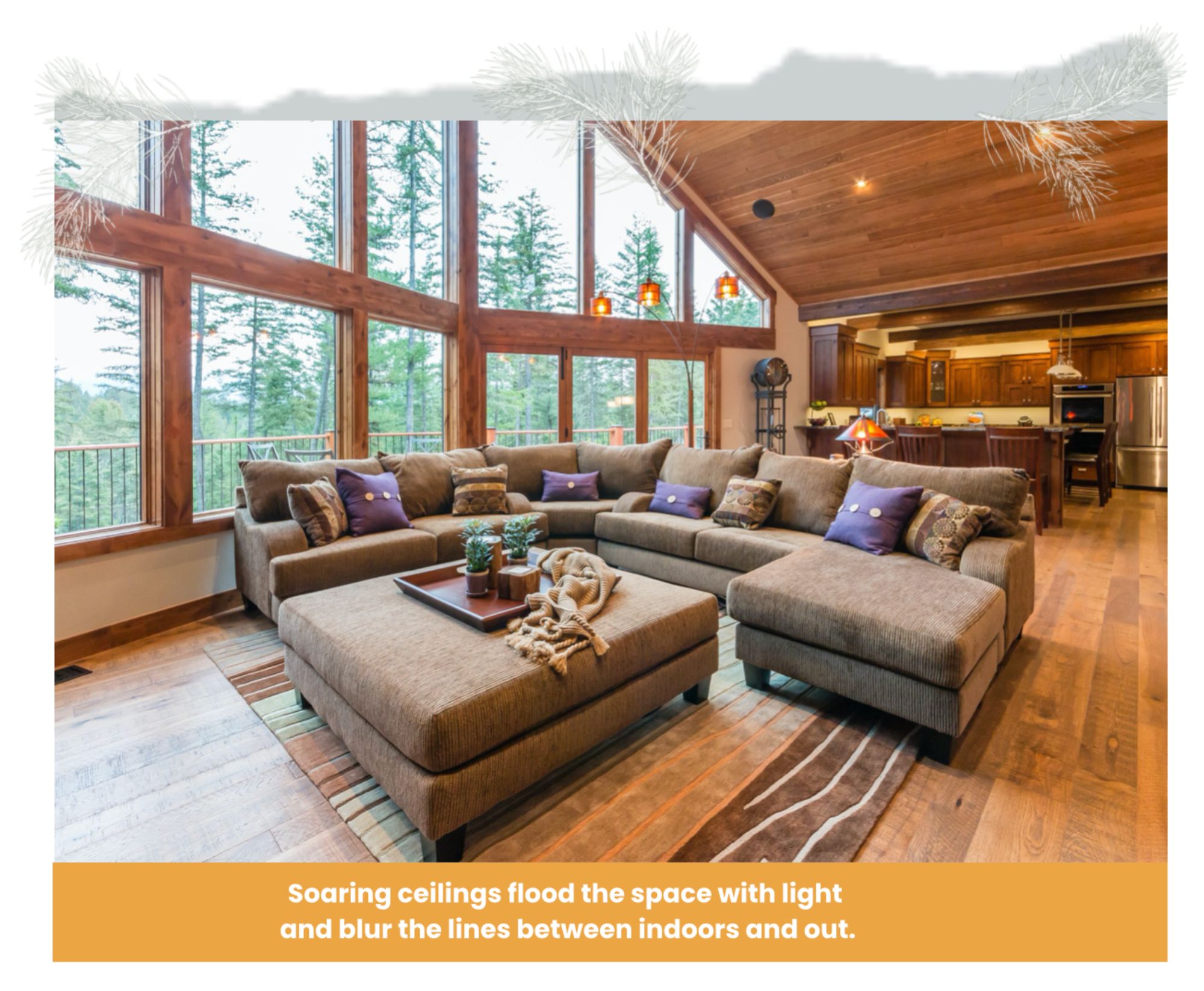
Vertical space is everything when it comes to an open concept log cabin plan. Higher first-floor walls—9 to 10 feet—and cathedral ceilings create a sense of grandeur while making room for 8-foot doors and 6-foot windows. These taller openings flood the space with light, blurring the lines between indoors and out, a hallmark of log home living.
This space also maximizes natural light, because you can upgrade to 6-foot-tall windows for an almost floor-to-ceiling effect, making the interior feel like it extends outdoors. Remember to position windows to complement, and not compete with, other features such as large-screen TVs, entertainment centers, and fireplaces.
DESIGN TIP #2
Use Structural Innovations To Remove Walls
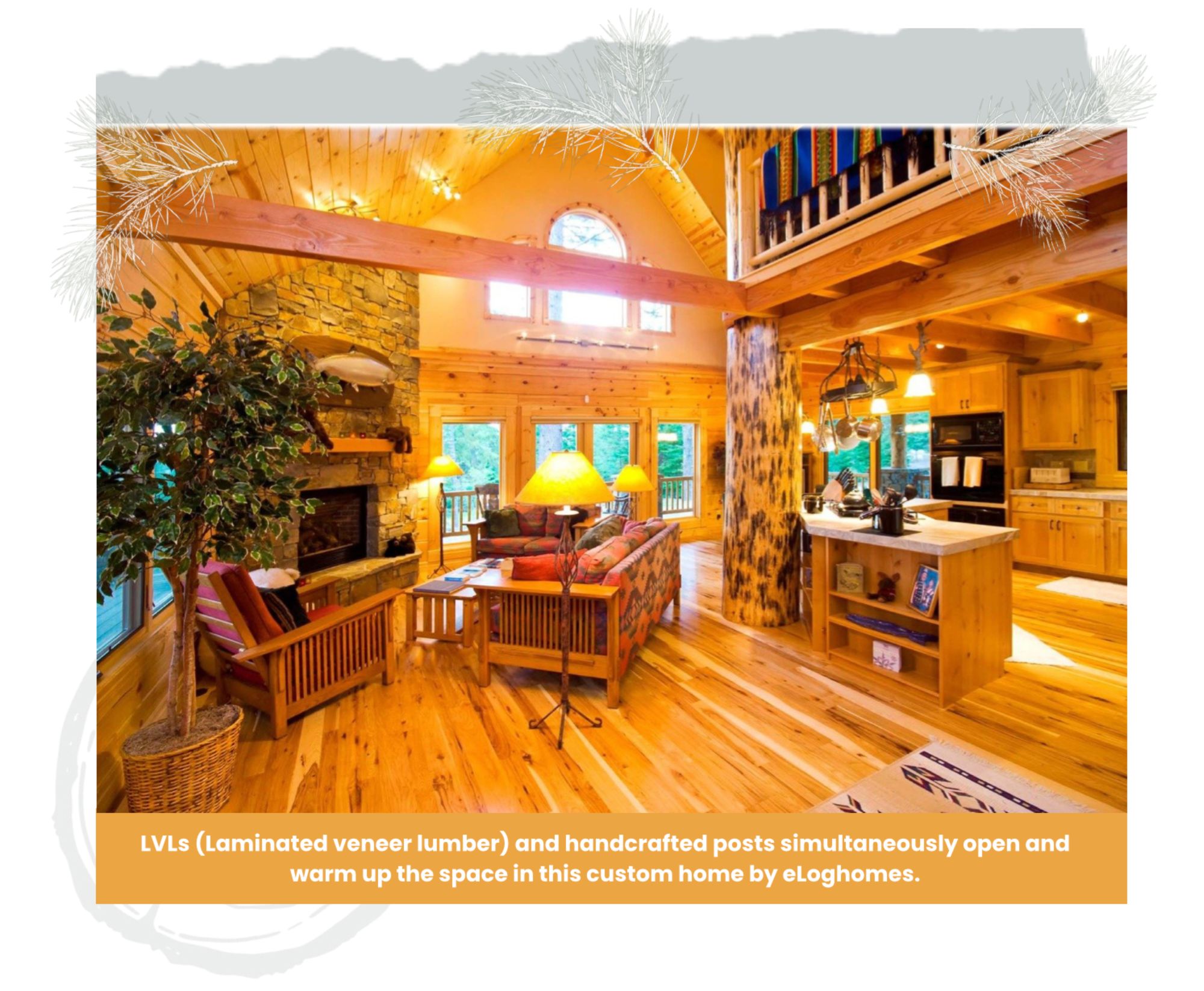
Next, rethink the structure of your log cabin home. Traditional walls between the living room, dining area, and kitchen can be eliminated with LVLs (laminated veneer lumber) to support the roof.
Handcrafted posts and beams can also be used to open up the space. This creates a single, expansive area that’s both visually stunning and perfect for entertaining.

DESIGN TIP #3
Plan a Functional Layout
The layout of the entire space, from kitchen to staircase to bathrooms, matters just as much as the size and position of the Great Room itself. When evaluating log home model kits, choose options where the kitchen and dining area flow into the main seating areas, and where a fireplace can be seen from many vantage points. This makes the space ideal for hosting and family interaction at all times of day. A staircase can be tucked behind one of the main walls in the home without interrupting the flow of the main space, or an open-tread staircase can maintain an open feel without cluttering the space. A large, welcoming foyer can also blend seamlessly into the rest of your log home, while a bathroom tucked nearby keeps things practical yet discreet.

DESIGN TIP #4
Brighten Your Log Cabin With Strategic Lighting
To create a warm and inviting open concept log home, avoid the dreaded “cave lighting” effect– where light fails to reach deep corners, leaving certain areas feeling dark and enclosed. Layer your lighting by combining ambient, task, and accent sources to ensure illumination throughout.
For instance, install a central chandelier or recessed ceiling lights for overall brightness, add table or floor lamps for focused tasks like reading, and incorporate wall sconces or uplights to highlight the rich texture of log walls.
This approach enhances the natural warmth of the wood. One additional tip: place mirrors opposite large picture windows to bounce light deeper into the space.

DESIGN TIP #5
Unify the Space With Careful Aesthetics
One of the best ways to create a seamless flow from one living space to the next on your main floor is to use light, neutral colors throughout your log home cabin. Whether you are using all logs or a combination of logs and drywall, you may choose a warm honey-toned finish on your logs and on kitchen cabinetry. When finishing your interior logs, keep in mind that almost all species of wood slowly turn color from lighter to slightly darker. But wood that is covered by draperies, mirrors, furniture, and pictures doesn’t change along with the rest of the wood. This can lead to problems when redecorating. To remedy this, consider choosing a light stain such as a natural or wheat tone, followed by a clear product. This technique lets you choose the color rather than letting nature choose for you slowly over time.
In addition to carefully chosen wood stains, you can add furnishings in neutral colors that can be elevated with pops of color throughout the space. These could include couch pillows and blanket throws, dining chair cushions and place settings, and wall art.
DESIGN TIP #6
Pay Attention to Detail
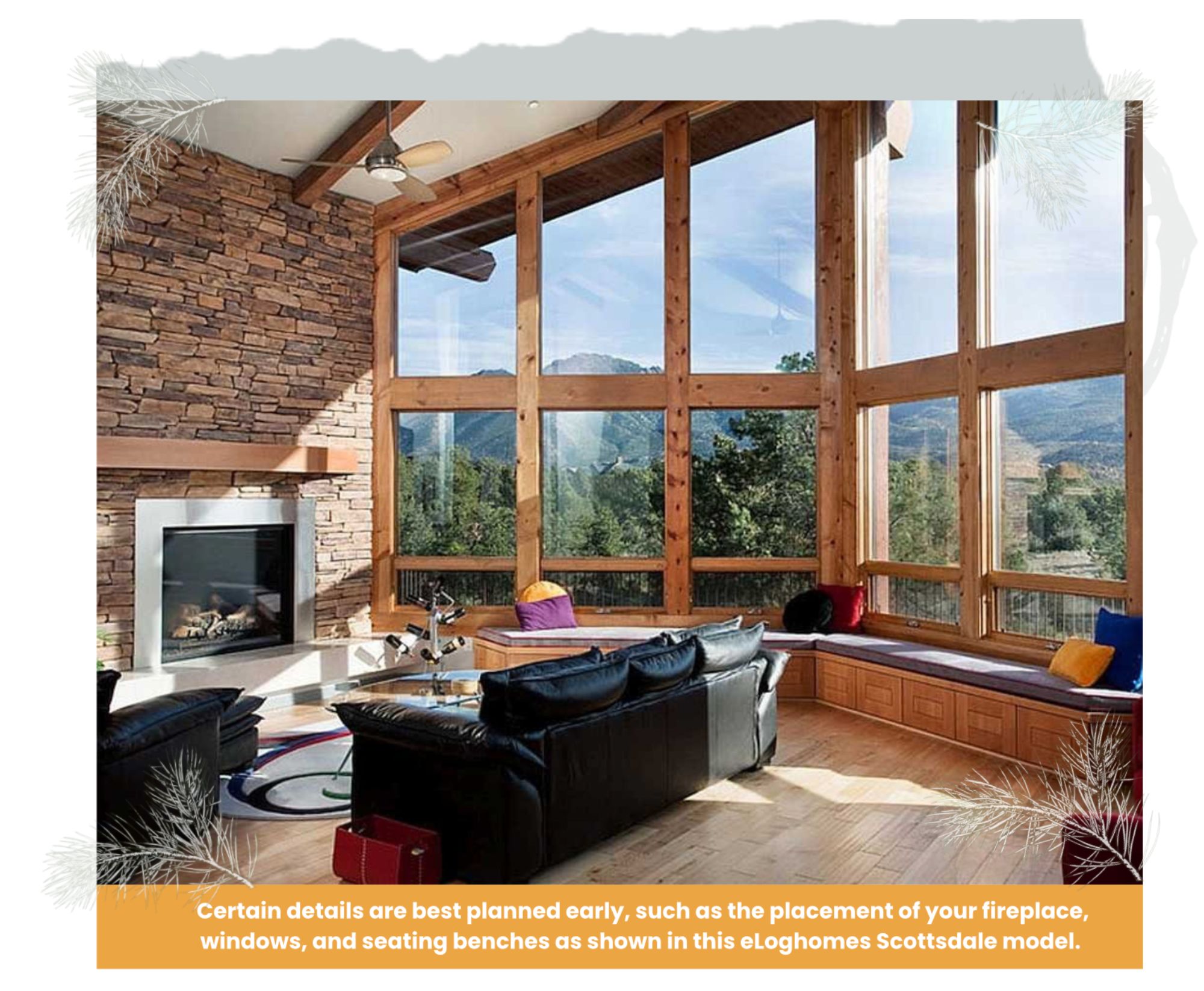
Details seal the deal, so ask your log home designer to offer advice on placement of fireplaces and entertainment areas, ensuring they work with window and door placements. Plan these areas early, and then think through furniture arrangements.
Cozy seating areas and a spacious dining table for large gatherings will foster connection among family and friends. A large kitchen island with additional counter seating can be placed adjacent to the dining area. And a built-in, cushioned bench near a window beckons to the guest who enjoys relaxing with a good book.