

Your log home journey just reached an exciting milestone—your materials have arrived. With your log home kit, logs, and components now on site, your project is officially moving from planning into reality.
What happens next is critical.
The way your materials are received, unloaded, inventoried, and organized will directly impact the efficiency of your build and the long-term quality of your log cabin. Taking the right steps now helps prevent delays, material damage, and unnecessary complications.
Here’s how to protect your investment and set your project up for success from day one.
What to Expect When Your Materials Arrive
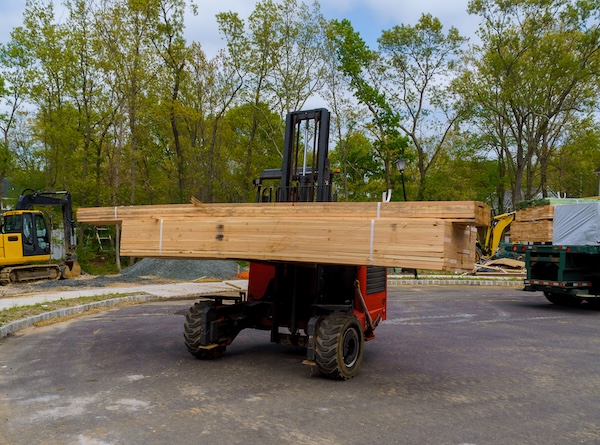
Your log home kit will typically arrive on one or more tractor-trailers, often ranging from 60–75 feet in length. Before delivery day, it’s important to ensure your site is accessible—or to have an alternative unloading location prepared if access is limited.
Once materials arrive:
- All required payments must be completed before unloading begins
- Materials will need to be unloaded efficiently to avoid delays
- You or your builder should be present to oversee the process
Planning ahead ensures a smooth delivery and prevents costly setbacks.
Use the Right Equipment for Unloading
Proper unloading equipment is essential for both safety and efficiency.
A forklift (lull or telehandler) with:
- All-terrain capability
- A minimum lifting capacity of 6,000 pounds
- Extended forks (recommended for larger materials)
is required to safely unload your logs and building components.
Having this equipment on-site for the full day—not just a partial rental—gives your builder or General Contractor the flexibility to properly place and organize materials for easy access during construction.

When and How to Take Inventory of Your Materials
Inventory is a critical step—but timing matters.
Do not inventory materials while trucks are being unloaded. Instead:
- Wait until all materials have been fully unloaded
- Use the provided Inventory Check-Off List
- Open wrapped bundles at the ends to verify contents
- Re-seal materials after inspection to maintain protection
Because a log home kit includes a large volume of materials, it’s helpful to:
- Keep a tape measure on hand to verify sizes
- Reference labeled bundles (e.g., wall systems, flooring, etc.)
- Report any shortages or damage within 14 days of delivery
A careful, organized inventory process ensures nothing is overlooked and keeps your log home build on track.
Keep Logs Elevated and Protected from Ground Moisture
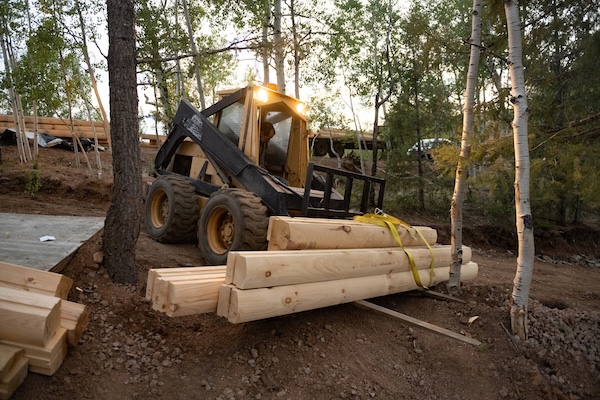
The most important first step in protecting your materials is keeping your logs off the ground and shielded from moisture.
Use pallets, runners, or blocking to elevate all materials in your log home kit. Direct contact with the ground allows moisture to seep into the wood, which can lead to staining, swelling, and long-term structural concerns.
Even when the ground appears dry, it retains moisture—and that moisture can travel upward into your materials over time. Creating a barrier between your logs and the earth is essential for preserving the quality of your log cabin.
Organize, Stack & Protect Materials for an Efficient Build
How your materials are arranged on-site directly impacts how smoothly your log home comes together.
Materials should be:
- Grouped and stacked by their intended use
- Clearly marked and easily accessible
- Positioned to align with the construction sequence
In most cases, your General Contractor will take the lead in organizing and staging materials for efficient use. Proper stacking not only reduces handling time but also minimizes the risk of damage during the build.
Well-organized materials keep your project moving—and your crew working efficiently.
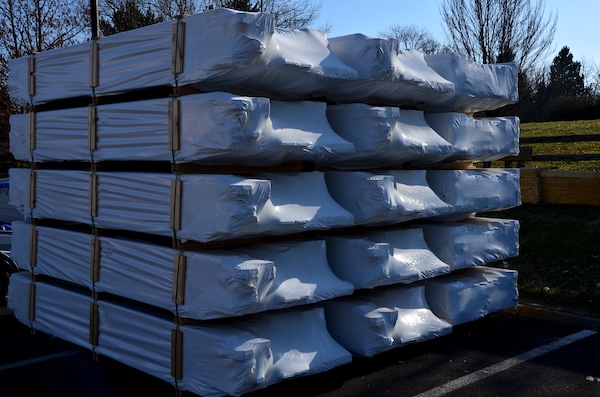
Use the Right Covering: Breathable is Better – It’s natural to want to fully seal and protect your materials—but airtight coverings can create more problems than they solve.
Instead, use breathable tarps or coverings that protect your log home kit from rain while still allowing moisture to escape. Without airflow, condensation can build up, leading to mold, mildew, and damage to your logs.
Protection is important—but proper ventilation is just as critical.
Set the Stage for a Successful Log Home Build
This phase is all about preparation—and it sets the tone for everything that follows.
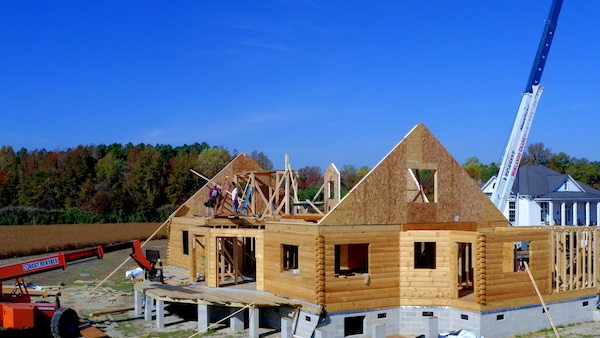
Properly receiving, inventorying, organizing, and protecting your log home kit helps prevent early-stage problems, protects your investment, and keeps your log cabin build on track from the very beginning.
If you have questions about material handling or site readiness, the eLoghomes team is here to help every step of the way.
Your log home is no longer just a plan—it’s officially underway.